News and Blog
-
Reflection from UUJME Delegation - January 18, 2026
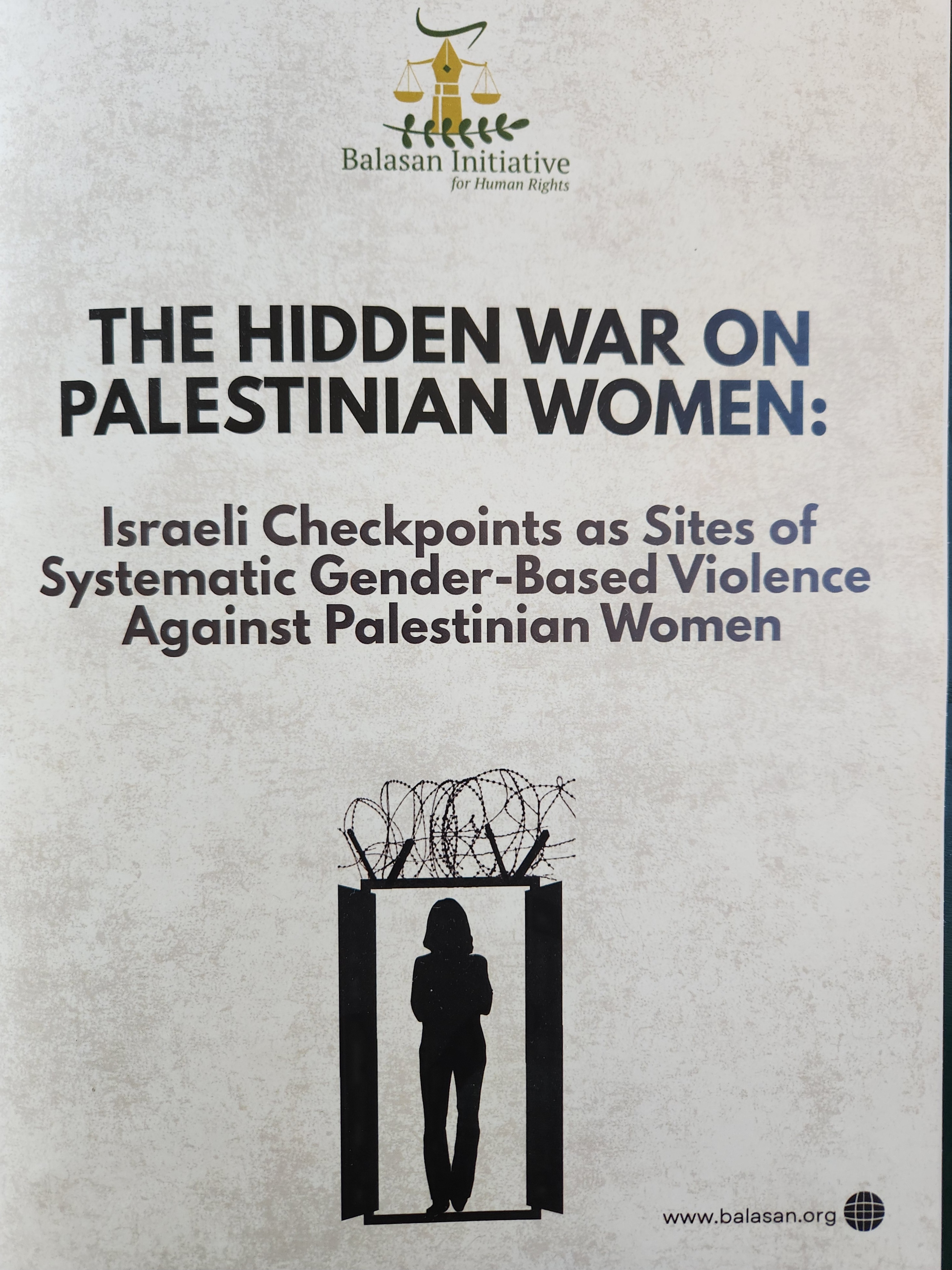
Photo: Booklet cover from the Balasan Institute, "The Hidden War on Palestinian Women."
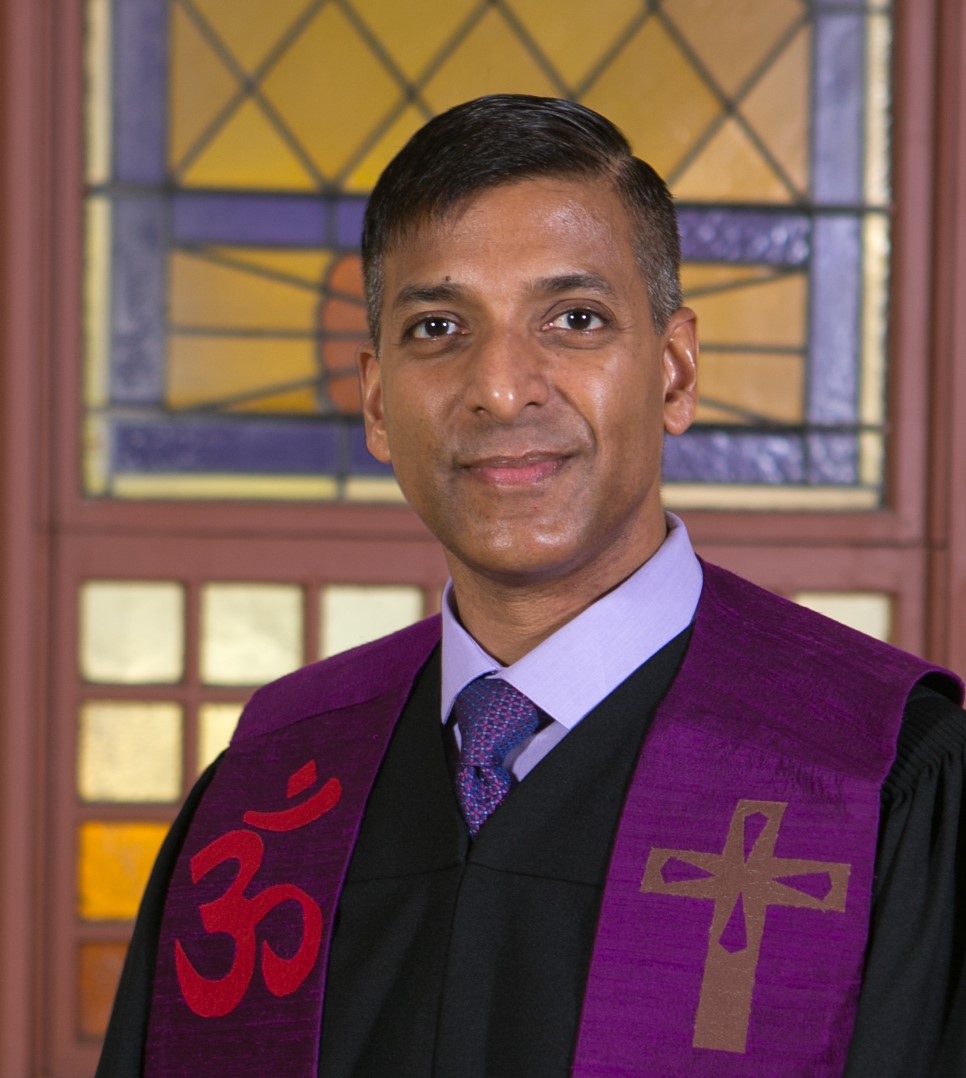
Rev. Manish Mishra-Marzetti.FROM REV. MANISH – UUJME DELEGATION UPDATE - January 18, 2026
A young Israeli soldier strides up and down our delegation bus, cradling in both hands an automatic rifle, with his fingers curled around the trigger. We are required to show our passports at this Israeli military checkpoint, not for the first time. The intentional intimidation is unmistakable – this is not a casual or friendly interaction. Being a brown-skinned person, I get nervous during ordinary traffic stops in the U.S., so you can imagine the anxiety of a situation like this. As our bus rolls away, having cleared the checkpoint, tears stream down my face knowing that the intimidation and fear tactics that our Palestinian siblings face is far, far worse than anything I will ever experience as a U.S. passport holder. For a brief time, the momentary stress and my sadness at these circumstances overwhelms me.
Though in Palestine, my heart is also thousands of miles from here with siblings in Minnesota. Similar tactics of fear and intimidation are being employed there right now, for seemingly no other reason than to cow people into political submission. Our Palestinian contacts have remarked this week, multiple times, that everything the U.S. experiences is first field tested in Palestine – militarized border security, surveillance of the civilian population, the employment of fear and intimidation, the creation of an environment so hostile that those who can flee will flee and go elsewhere. These connections – both direct and indirect – between Palestine and the U.S. are disturbing.
I am also unsettled by the emerging recognition of how little I have actually known about the day-to-day realities of Palestine. As an undergraduate, I academically specialized in the Arab world. I spent years studying Islam, Arab history, politics, and economics, and the Arabic language. I have served our nation as a U.S. diplomat in the Persian Gulf, helping implement U.S. Middle East foreign policy. I am not an average U.S. citizen when it comes to the Middle East – I have specialized academic training and professional experience in this region.
Despite that, I have been humbled to discover significant gaps in my knowledge regarding Palestine. I only knew a fraction of what we have been learning in-country during this delegation. This has led me to wonder how it can be that someone with specialized training and experience, like myself, has in reality known so little about Palestine. And if I – someone who has a modicum of ‘expertise’ in the region – have had huge gaps in knowledge, what might that mean for the average American, who spends far less time learning about this part of the world?
A few years ago, I created and led a year-long Civil Rights seminar. I chose to offer this seminar for some very specific reasons. As I spent time independently learning about Black history it became clear to me that very little Black history is taught in our nation. One has to actively seek out and learn this history, and even then it might not be easy. This is the phenomenon of hidden histories – histories that for political and cultural reasons are marginalized and/or invisibilized. There are many reasons why certain histories and experiences become invisible: they don’t support the dominant cultural narrative; they evoke feelings of shame; the facts and stories are politically inconvenient or unpalatable, etc. For these and other reasons, histories get suppressed or hidden, and one has to do a lot of excavation work to uncover them. That difficult work of excavation can be historical, cultural, and/or intra-personal – we may have to also excavate assumptions or acculturated norms and understandings. University of Virginia Professor Mar Hicks notes that when important facts and experiences are hidden, “it can lead us to erroneous conclusions about why larger historical events unfolded the way they did.”
Palestine has been a reminder to me that oppression moves in familiar patterns across very different contexts. The experiences of the oppressed are invalidated, denigrated, or hidden. The oppressors justify their actions via narratives of superiority and/or exceptionalism. That sense of superiority is then passed down culturally from one generation to the next. Bellicosity, threats, and violence are used to shut down any critical examination of the oppressive situation. There is often an extraction of resources - labor, money, property – from the oppressed to the oppressor. Most critically, the oppressed are dehumanized, and through that dehumanization are understood to deserve whatever abuse they are suffering.
The challenge in all this is that patterns of oppression can remain alive and undetected if we’re not looking at the full picture – if we’re excluding from our analysis histories and experiences that have been hidden from us.
Making that which has been invisible visible, and then factoring that additional information into our lives, takes effort. It requires getting beyond the hubris of thinking that we already know everything that we need to know about Israel and Palestine. (Unless we’re Palestinian, we probably don’t.) It requires getting beyond the checked-out posture of viewing Israel and Palestine as an intractable problem with no solution. (Checking out allows harm to continue unabated.) It requires confronting the reality that the United States is Israel’s largest funder; if the government of Israel is causing harm, U.S. taxpayers are funding that harm.
We have a moral obligation to learn more, to discuss more, and to effect change where we can. As my delegation experience comes to a close, I, for one, am resolved to do that. I invite you to join me in that commitment.
From Palestine with love, Rev. Manish
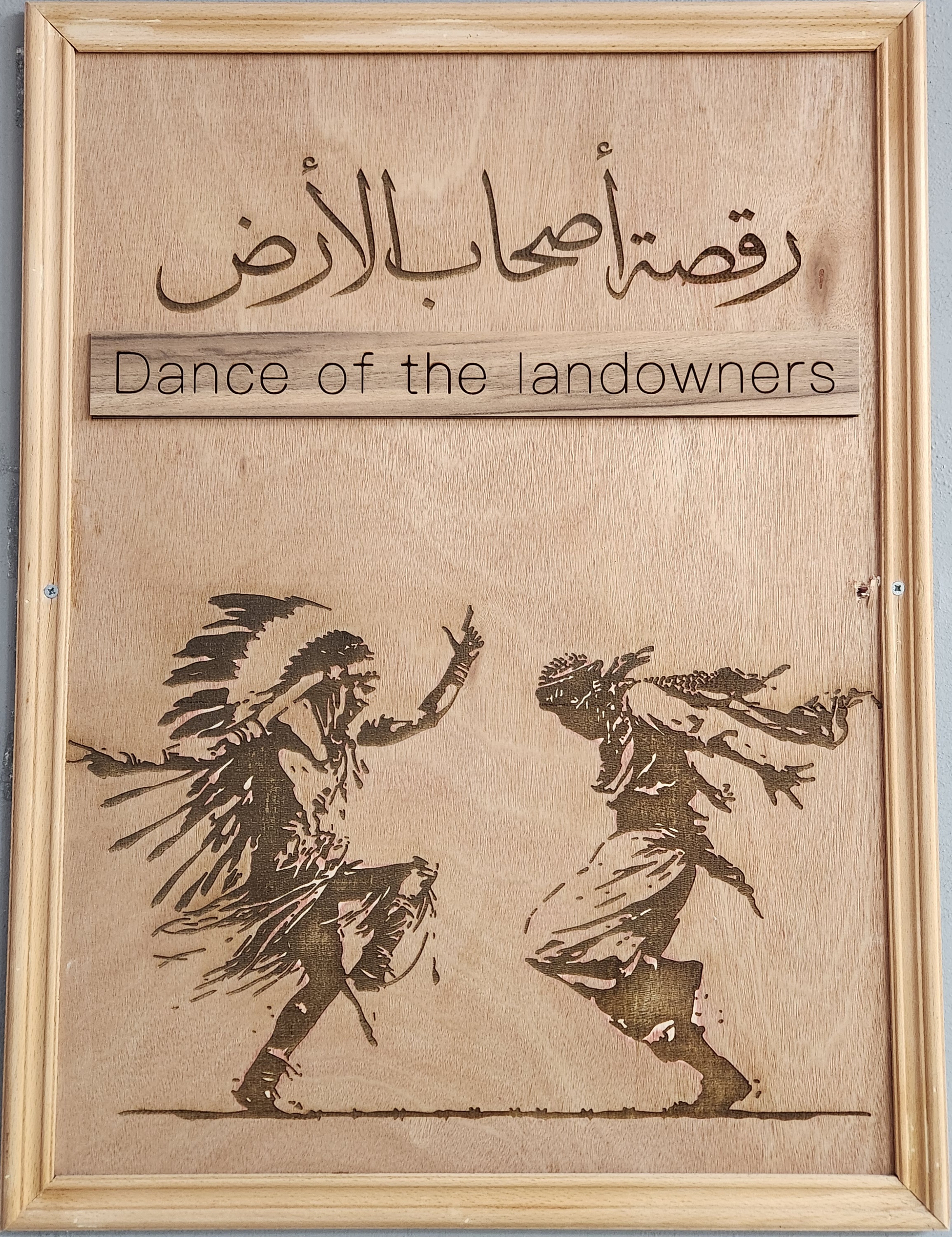
Photo: Framed poster, "Dance of the landowners," depicting
a Native American and a Palestinian dancer.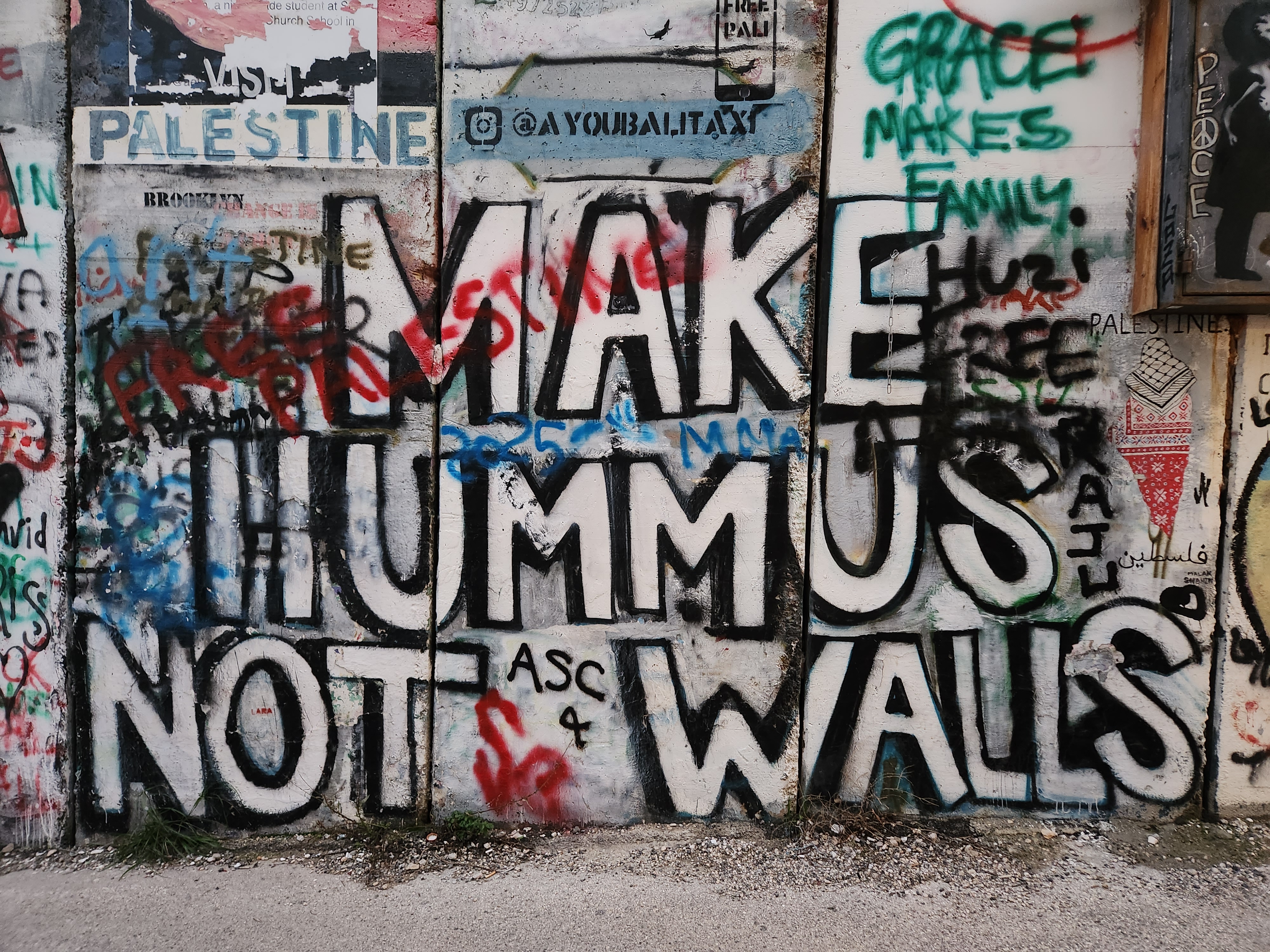
Photo: Graffiti on the separation wall in the occupied West Bank;
Make Hummus Not War. -
Reflection from UUJME Delegation - January 16, 2026
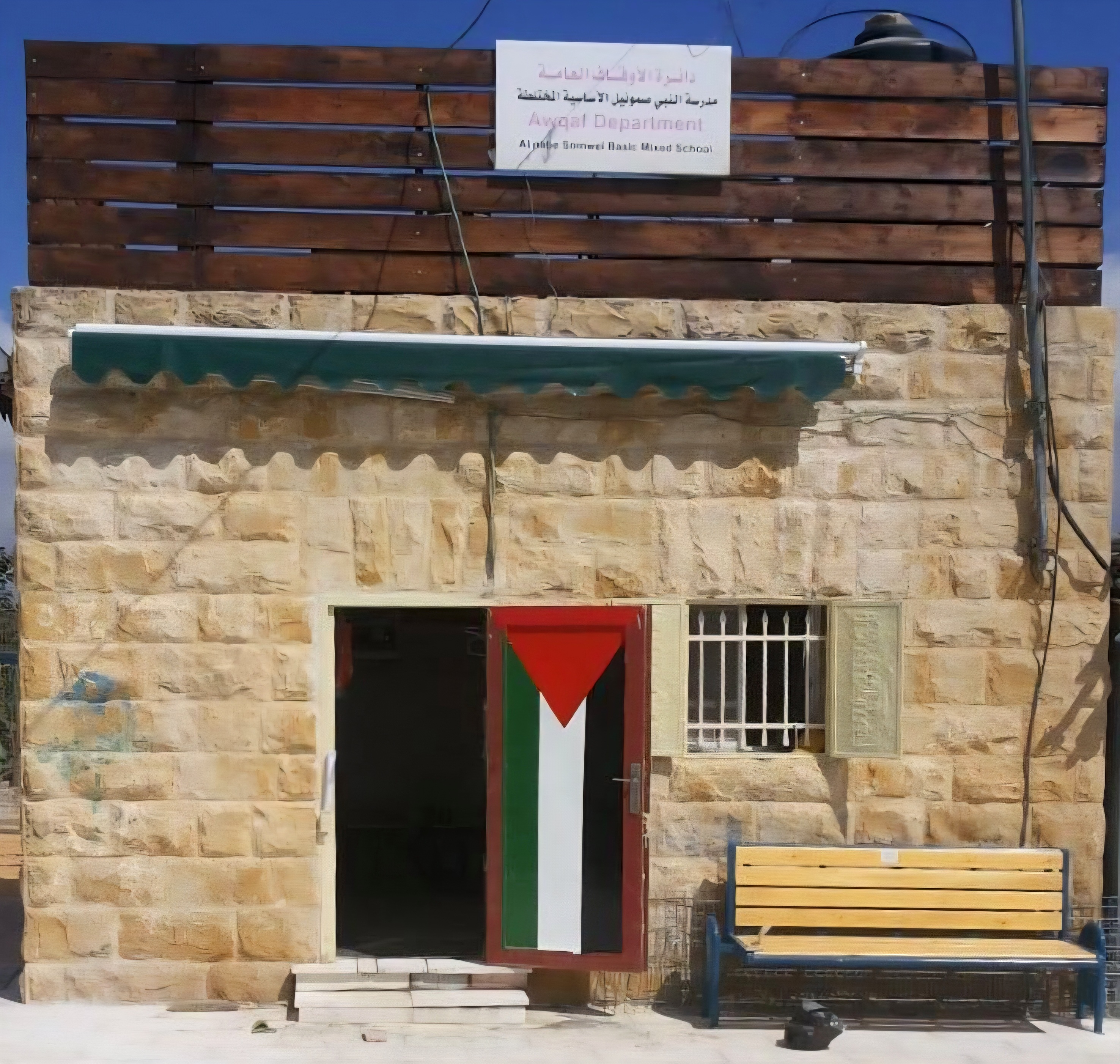
Photo: Building in the occupied West Bank with Palestinian flag.
Rev. Manish Mishra-Marzetti.FROM REV. MANISH – UUJME DELEGATION UPDATE - January 16, 2026
Having been a U.S. diplomat at the time of the Oslo Accords, in 1993, I assumed for decades that the Accords’ two-state solution was the holy grail of peace in the Middle East.
But then a local Palestinian leader shocked me. “Everyone in the West is obsessed with peace in the Middle East. And, every conversation about ‘peace’ devolves into a conversation about ‘piece’ – which side is going to get which pieces of land. What if a two-state solution is not possible? What if that isn’t the answer?” he asked.
I had never considered this. What if the two-state solution is a desert-like mirage? An illusory vision that the West continues to fervently chase after? History certainly demonstrates that there are mirage-like qualities to the notion of a two-state solution.
In the 1940s, as the British were crafting the possibility of a Jewish state and a Palestinian state in the Levant, the composition of historical Palestine was approximately 70% Palestinian and 30% Jewish. Despite those numbers, the partition plan that was eventually adopted by the UN General Assembly in 1947, at the behest of the British, disproportionately gave the Jewish minority 56% of the land, the Palestinians 43%, and designated 1% as an international zone (Jerusalem and its surrounding areas). The Jewish Zionist movement, which at that time had no land, thought this plan was great and readily agreed; the Palestinians objected and did not agree to a partition.
The UN plan, though never formally implemented, provided the first iteration of two potential states in Palestine. In the absence of UN implementation of the partition plan, Jewish Zionist militia begin to forcibly implement the plan in 1948. Israelis call this conflict the War of Independence. Palestinians call it the Nakba, “the catastrophe,” with the loss of life and homes and the forcible removal of Palestinians from their own lands being the catastrophe. Between 1948-1949, under the pretext of “war,” Israel proceeds in taking over even more land than the United Nations had disproportionately allocated in its partition plan. By 1949, Israel had taken over 78% of the land in historical Palestine. By the conclusion of the Six-Day War in 1967, the remaining Palestinian lands (including the West Bank, Gaza, and East Jerusalem) are occupied by Israel and subject to Israeli military control.
The subsequent 1993 Oslo Accords required Palestinians to accept that 78% of historical Palestine would forever be Israel, accepting permanently the outcomes of the Nakba. In turn, Israel would eventually withdraw its military forces from occupied Palestinian lands (the West Bank, Gaza, and East Jerusalem) and potentially remove Jewish settlers from those lands. These potential Oslo commitments got Israeli Prime Minister Yitzhak Rabin assassinated in 1995 by a Jewish settler who viewed Rabin as a traitor to the Jewish people due to his support of the Accords. The assassination is credited with having killed not just Rabin but also the Oslo process: a more conservative Israeli government follows Rabin’s death, one that was not committed to the Accords.
What resumes in earnest after Rabin’s death is Israel’s settlement program. In 1993, the West Bank and East Jerusalem held about 250,000 Jewish settlers. By 2025, that number was 750,000. Today, a two-state solution would require either the forced removal of three-quarters of a million Jewish settlers from Palestinian lands or for those Jewish settlers to accept living in a Palestinian-run state. Both of those possibilities seem unlikely, and that very unlikelihood may have been the Israeli government’s implicit goal: to undermine the possibility of a two-state solution by robustly placing Jewish settlers in occupied Palestinian lands.
To my surprise, there are Palestinian leaders who openly wonder what it might be like for everybody to live together in a genuinely democratic state, one that embodies equality for all its citizens. Our delegation met a Palestinian former member of the Knesset, whose political party advocates exactly this: an Israeli state with genuine equality for all. He and his political party are considered “extremists” for harboring such views, because true political and social equality for all would undermine the identity of Israel as a state by and for the Jewish people.
What, then, is the solution? Surely, genocide and apartheid can’t be the answer. But perhaps here, as well, genocide and the brutality of apartheid have another implicit goal: to push Palestinians into voluntarily vacating their historical lands and living elsewhere – anywhere other than Israel and the occupied Palestinian territories.
One Palestinian activist shared with our delegation his West Bank Israeli settler neighbor’s idea of how the Palestine and Israel question could be resolved: “When all the Arabs leave, then there will be peace.”
Mainstream Israeli politicians find full equality within the state of Israel to be unacceptable. The rest of the world finds genocide, apartheid, and forced removal to be unacceptable, yet has done very little to stop these realities from being thrust upon the Palestinian people.
Might it be, that in taking little or no action, the world is de facto allowing a “solution” to slowly play out..? It is a solution that represents the ongoing dispossession and suffering of the Palestinian people.
Holding the heartache of all this alongside you, Rev. Manish
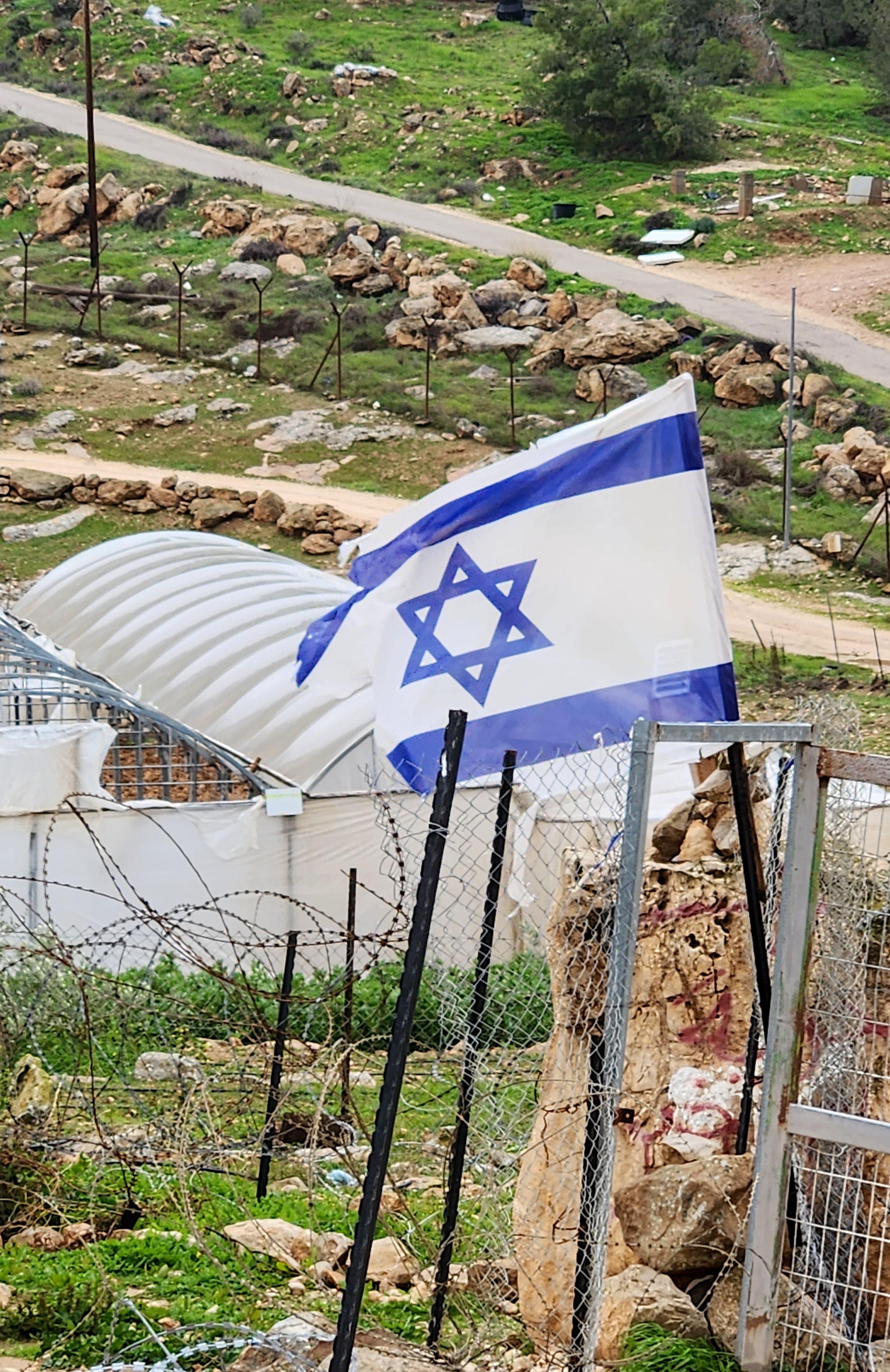
Photo: Israeli flag by a fence in the occupied West Bank.
Rev. Manish Mishra-Marzetti -
Reflection from UUJME Delegation - January 13, 2026
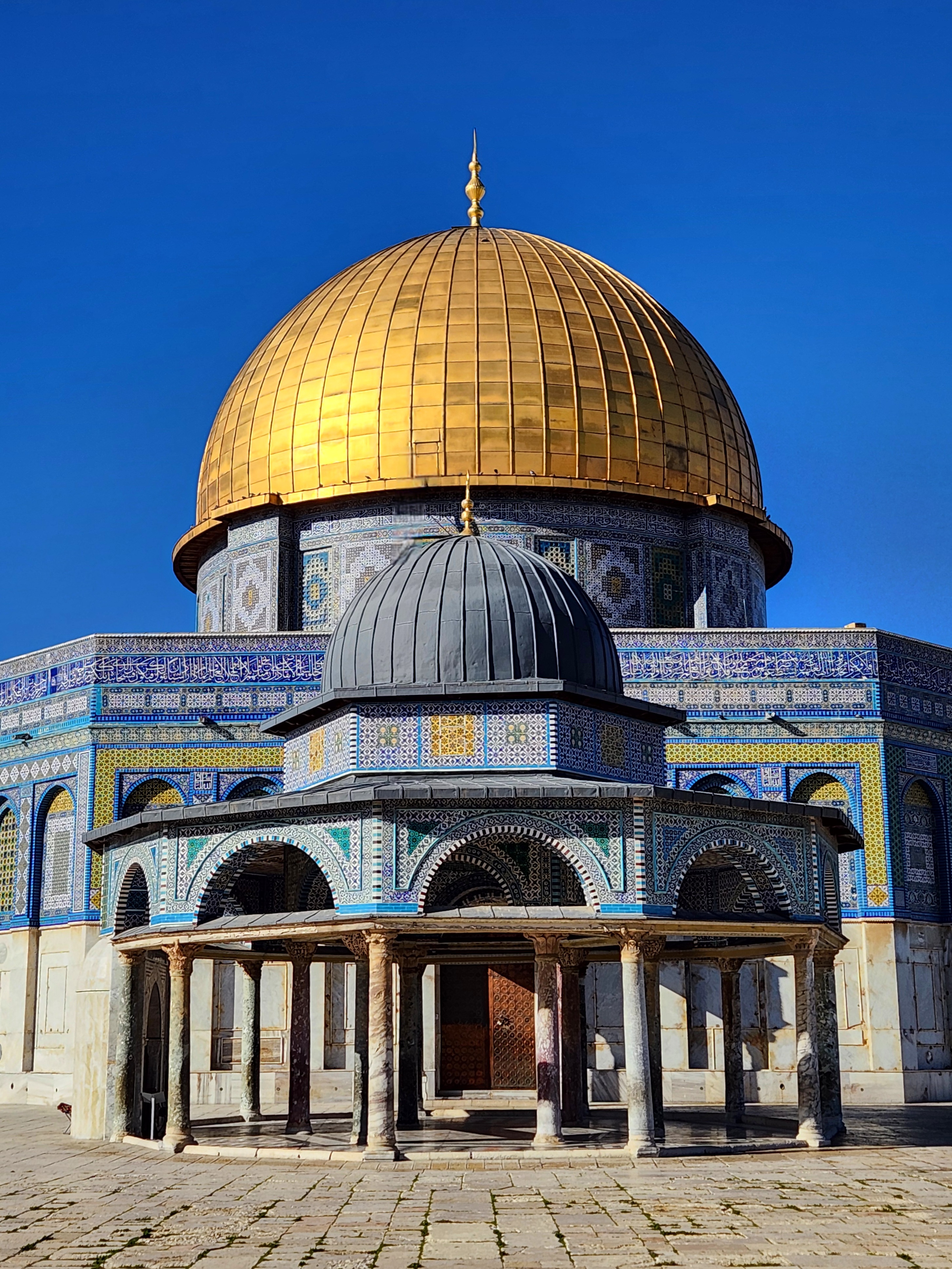
Photo: Dome of the Rock mosque, Jerusalem. Photos by Rev. Manish Mishra-Marzetti.
FROM REV. MANISH – UUJME DELEGATION UPDATE - January 13, 2026
I love being here, and it is hard being here. This is what I can say about Jerusalem. Jerusalem poignantly reminds me of my ancestral hometown of Lucknow, India: there is profound beauty and potential around every corner and the city’s lived reality is fraught.
Lucknow, as the once Islamic cultural capital of India, is a pluralistic intersection of language, cuisine, poetry, architecture, music and more. The food, language, and art has historically been a syncretic mix of Hindu and Muslim cultural traditions, one that I have always found deeply beautiful and inspiring. Muslims and Hindus have lived side-by-side for centuries in Lucknow and at their best learned from one another and thrived together.
Yet, this is not the whole story. With the rise of Hindutva (muscular and militaristic Hindu nationalism) throughout India, local government in Lucknow is controlled by Hindu nationalist politicians and local Muslims have to live under the political radar and with the reality of fear. Politically, Muslims are reminded at every turn that their well-being and livelihoods are precarious; they should not cause a fuss and should be grateful for whatever their current second-class citizen status brings them. It’s awful and deeply disappointing to one who loves the beauty of Lucknow’s pluralistic and syncretic traditions.
India has been much on my mind as I navigate the streets of Jerusalem, experiencing a similar pluralistic beauty and also, unfortunately, the failed realization of pluralism’s potential. It is heart achingly disappointing, most especially as one realizes that the right seeds – the right ingredients – are all there.
In a single day this week, our delegation visited the third holiest site in all of Islam, the Al Aqsa Mosque; the Church of the Holy Sepulchre, one of the holiest sites in all of Christianity; and, the Western Wall, one of the holiest sites in Judaism. All of this within easy walking distance of one another. These sites hold immense physical beauty – Al Aqsa and the Church of the Holy Sepulchre are hands down the most physically beautiful mosque and church I have ever visited, and the Western Wall holds its own unadorned yet powerful beauty.
That physical beauty is complemented by the beauty of the people visiting these sites who are devoutly engaged in prayer and reflection – individuals bringing their hopes and dreams to these unique places of pilgrimage. Muslims, Christians, and Jews all deeply engaged in profound spiritual reflection, mere steps from one another. My pluralistic heart immediately recognized the cultural and spiritual potential in this. How powerful it would be to share these longings of the heart with one another – to bridge difference and find commonality through our similar and parallel human yearnings! It should be possible to do this, and yet the lived reality here is something else.
The government of Israel severely restricts when and how Muslims can visit Al Aqsa. As foreign guests we were able to visit the mosque on our day of choosing, but it was a mosque that was relatively empty due to the stringent regulation of Muslim pilgrims to this site. Outside and beyond the mosque, heavily armed Israeli army and IDF forces permeate Old Jerusalem, reminding all that they are being monitored and that anything untoward would be met with violence. In the Jewish Quarter, near the Western Wall, we saw signs and merchandise uplifting Donald Trump’s muscular and militaristic politics – celebrating him and the MAGA movement. I learned that similarly minded muscular and militaristic Jews hold prophetic anticipation of the future construction of the Third Temple of Jerusalem; yet, realizing this vision by necessity would require the razing of Al Aqsa Mosque in order to build the Third Temple on that same site.
A local Jesuit priest who grew up in apartheid South Africa described the lived energies of Jerusalem as “dark” (heavy, fraught); an environment in which the kind of pluralistic inter-religious engagement that I cherish is virtually absent, he shared.
Still, I believe. I know in my heart that we can find commonality and that our differences can be a source of beauty and strength. I know this because I have experienced it. It is possible, even today, to hold a higher and deeper vision of our shared humanity – one that refutes and transmutes the fear and hatred-based nationalisms and fundamentalisms that would have us lunging at one another’s throats. We can do better.
Beauty and possibility remain our pluralistic calling.
May we hold that prophetic vision together.
With much love, Rev. Manish
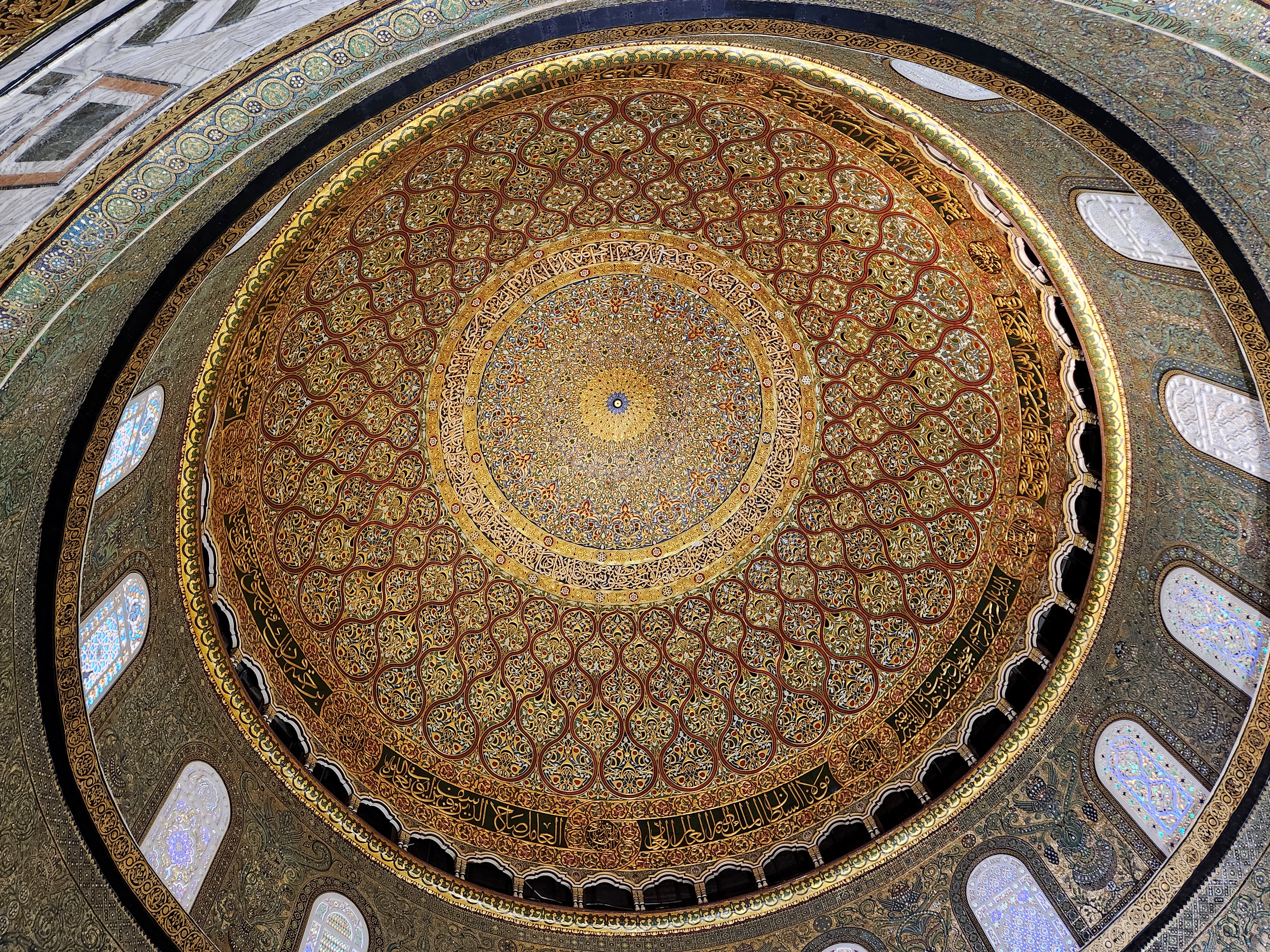
Photo: Inside view of Dome of the Rock.
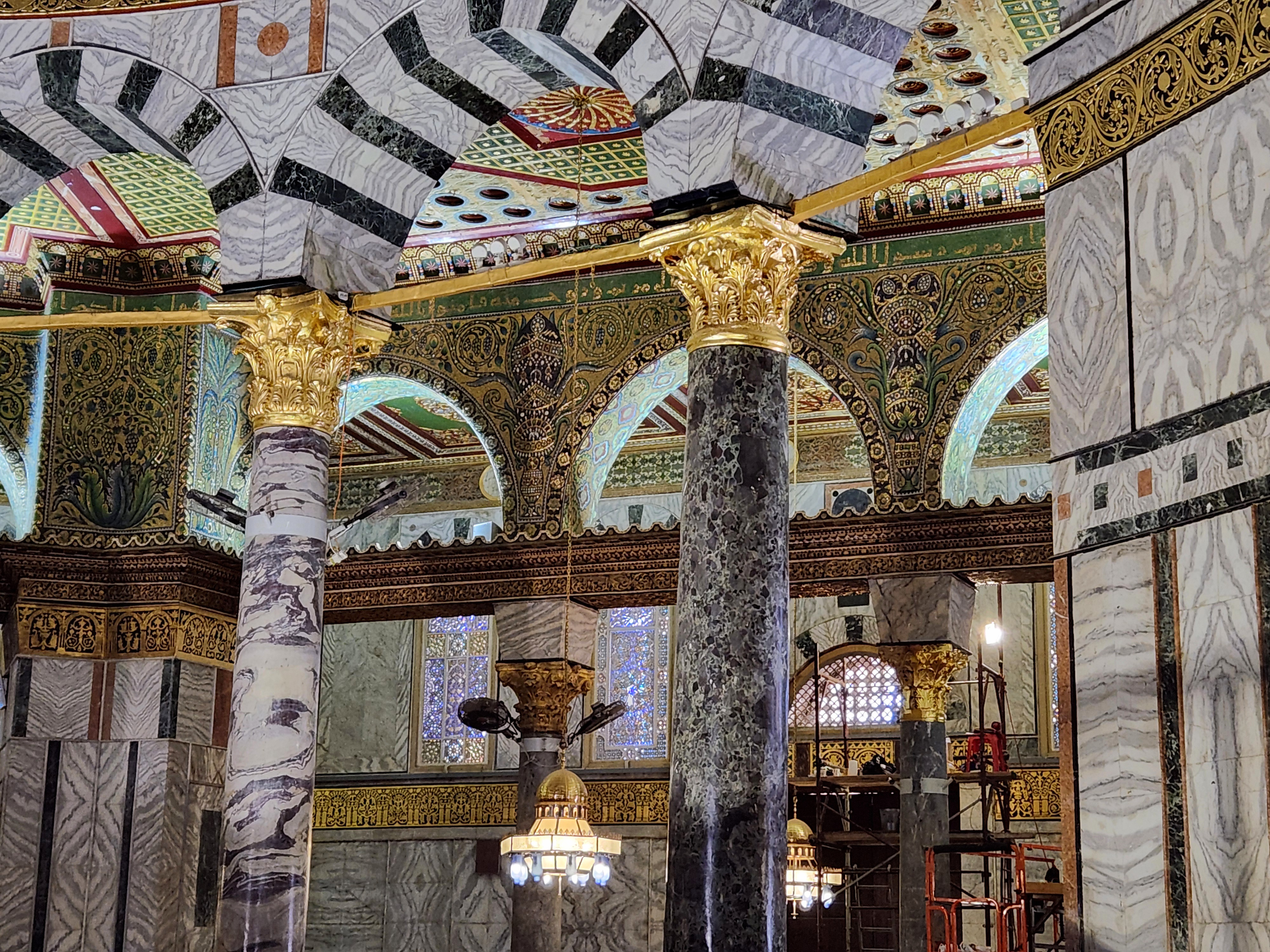
Photo: Columns inside Dome of the Rock mosque.
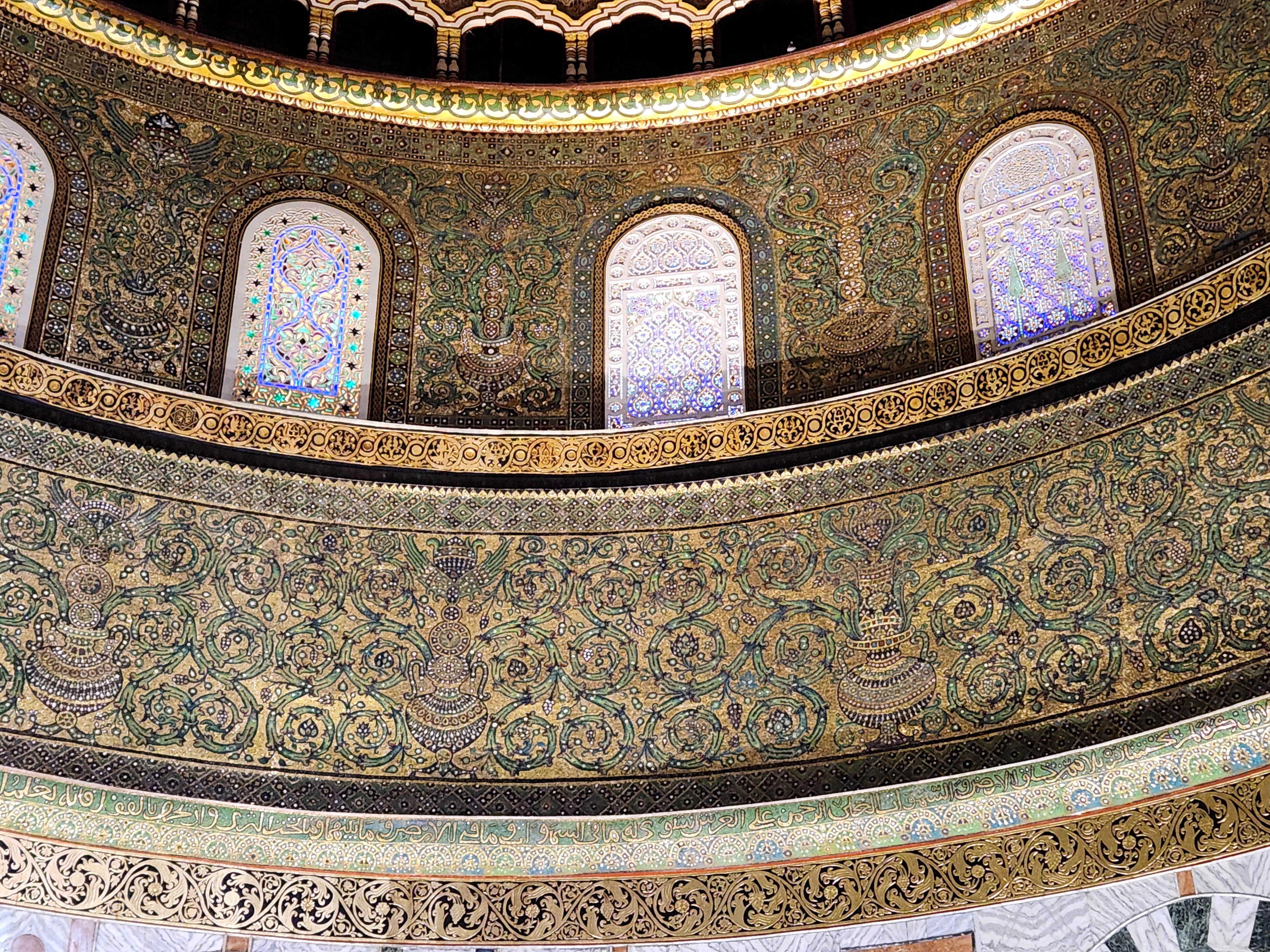
Photo: Another view inside Dome of the Rock.
-
Reflection from UUJME Delegation - January 11, 2026
FROM REV. MANISH – UUJME DELEGATION UPDATE - January 11, 2026
I am writing from Jerusalem, deeply jetlagged and also processing what I have been encountering and learning on this journey. The land crossing from Jordan into the West Bank and Israel was an experience that included traveling by foot and bus across the militarized border. It included multiple checks and re-checks by each government (the governments of Jordan and Israel). I have included some images of the crowds our delegation had to navigate as we began the border crossing by foot, carrying our luggage with us.
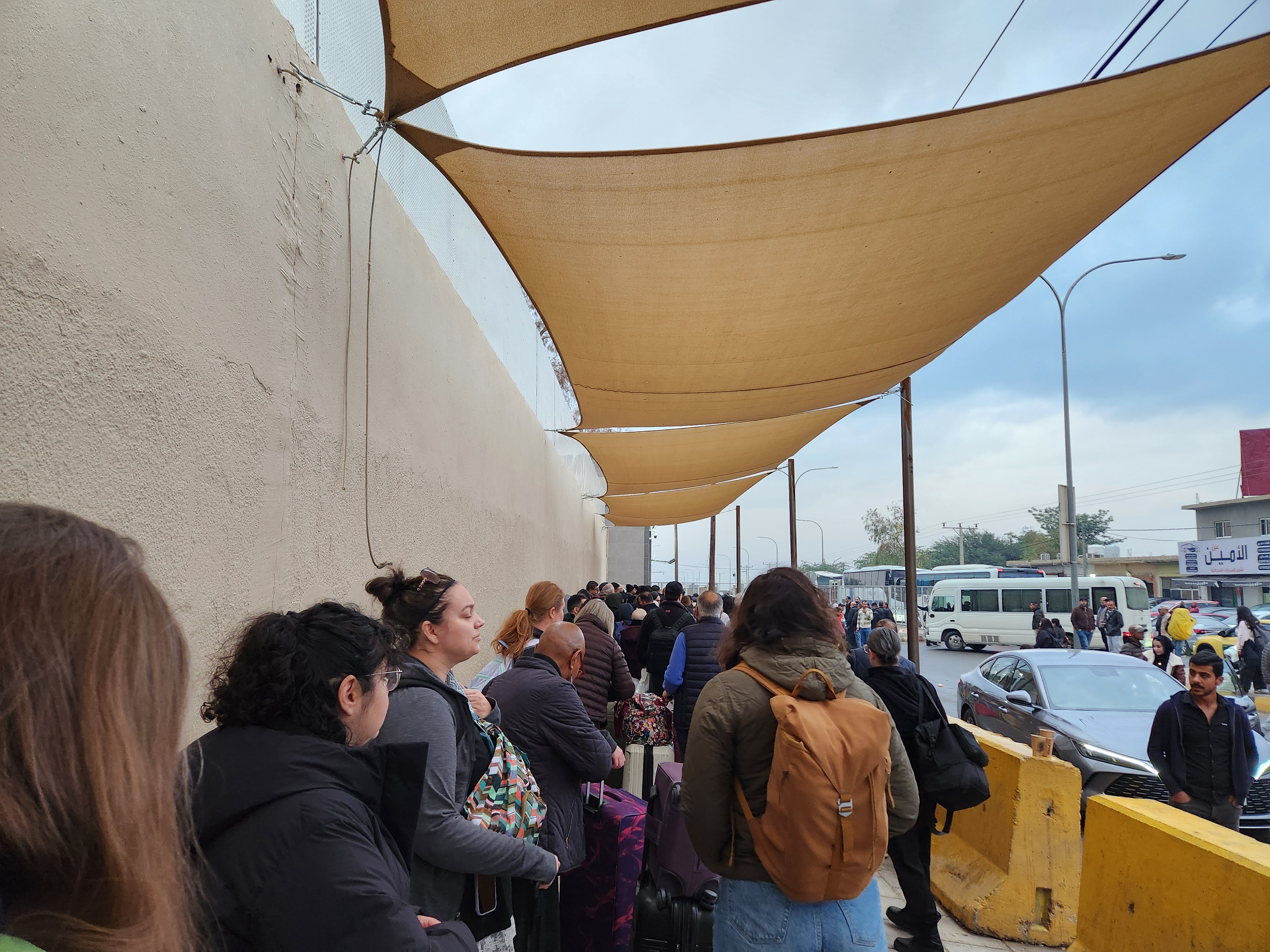
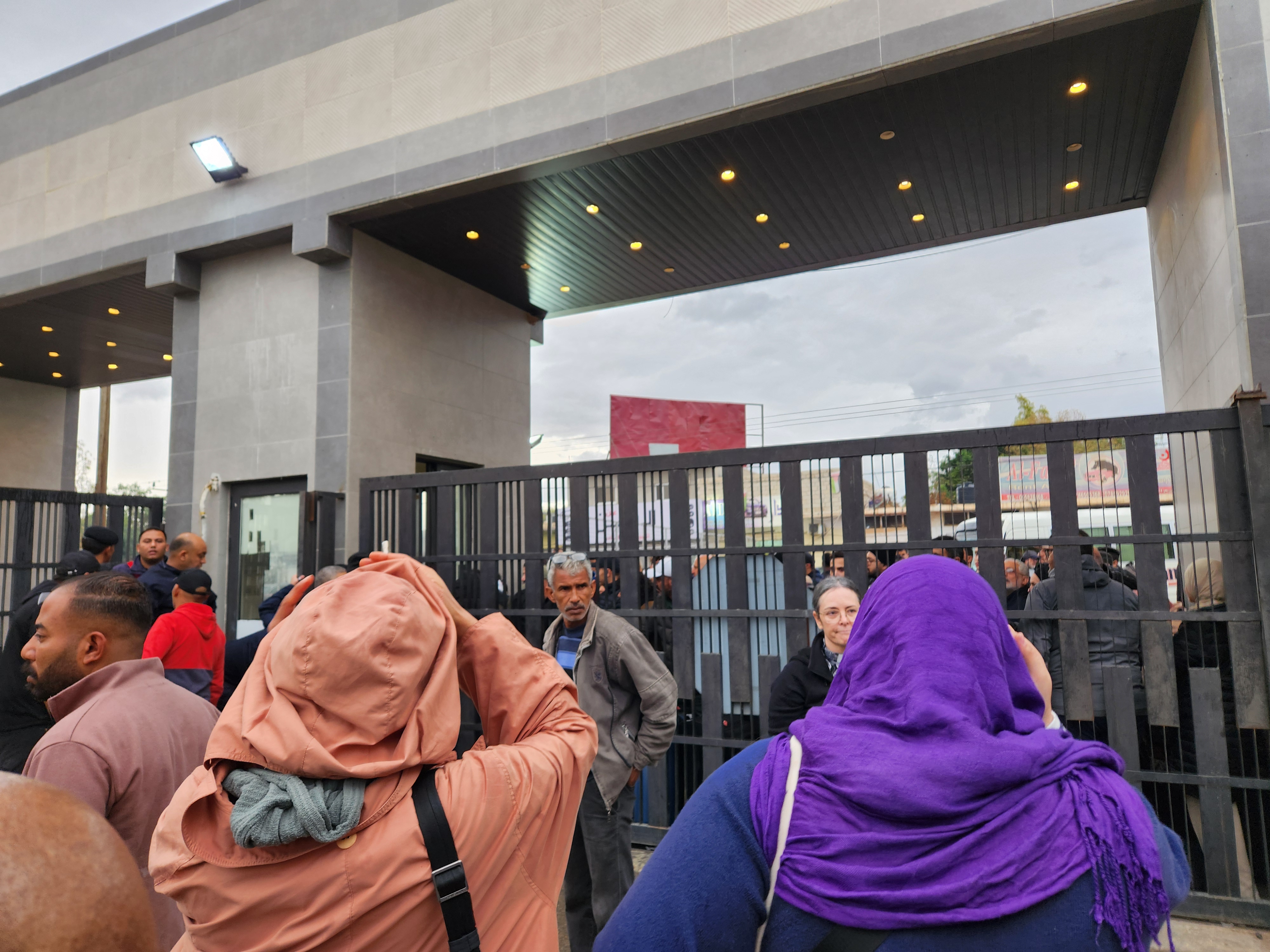
Photos: Militarized border crossing between Jordan and occupied West Bank.
I learned about the language of “apartheid” being applied to the circumstances of the Palestinian people from our Quaker siblings. In June 2025, UUAA signed onto the Quaker-led Apartheid-Free Communities Pledge as a part of the resolution we adopted in support of Palestinian human rights.
While I could conceptually (theoretically) understand the reasoning of applying the term apartheid in the Palestinian context, I was not clear what this meant in terms of the day-to-day realities of the Palestinian people. I have only been in the region for two days, and apartheid is absolutely what the Palestinian people are experiencing – separate and unequal treatment (at every turn) by the government that dominates and militarily controls them. Palestinians drive with different colored license plates, and vehicles with Palestinian plates are subject to additional security checks and travel limitations. Most Palestinians need permits to travel within and to/from the Palestinian lands – and the granting of these permits by the government of Israel, and the restrictions that the permits may include, can feel arbitrary and capricious to Palestinians. The restrictions on movement are experienced as control, as intentionally limiting freedom of movement, and with that the ability of the Palestinian people to communicate with one another, be in relationship with one another, and/or organize. Heavily armed IDF military personnel routinely roam the streets of Jerusalem, and from my perspective as a first-time visitor, appear more menacing than helpful or friendly. Palestinians pay taxes to the government of Israel, on equal par with the rates that Israeli citizens pay, but at no turn receive similar government benefits or support. The government of Israel has even built a military wall around East Jerusalem, similar in style/feel to the border wall that exists along much of the US-Mexico border. This wall places the West Bank’s water supply under Israeli control and the government of Israel ensures that this water flows freely to Israeli settlements while charging Palestinian communities for access to their own water.
In sum, Palestinians live under Israeli military domination and are assumed to be a threat that must be controlled, managed, and subjugated. Apartheid (separate and unequal treatment) is the day-to-day lived reality of the Palestinian people.
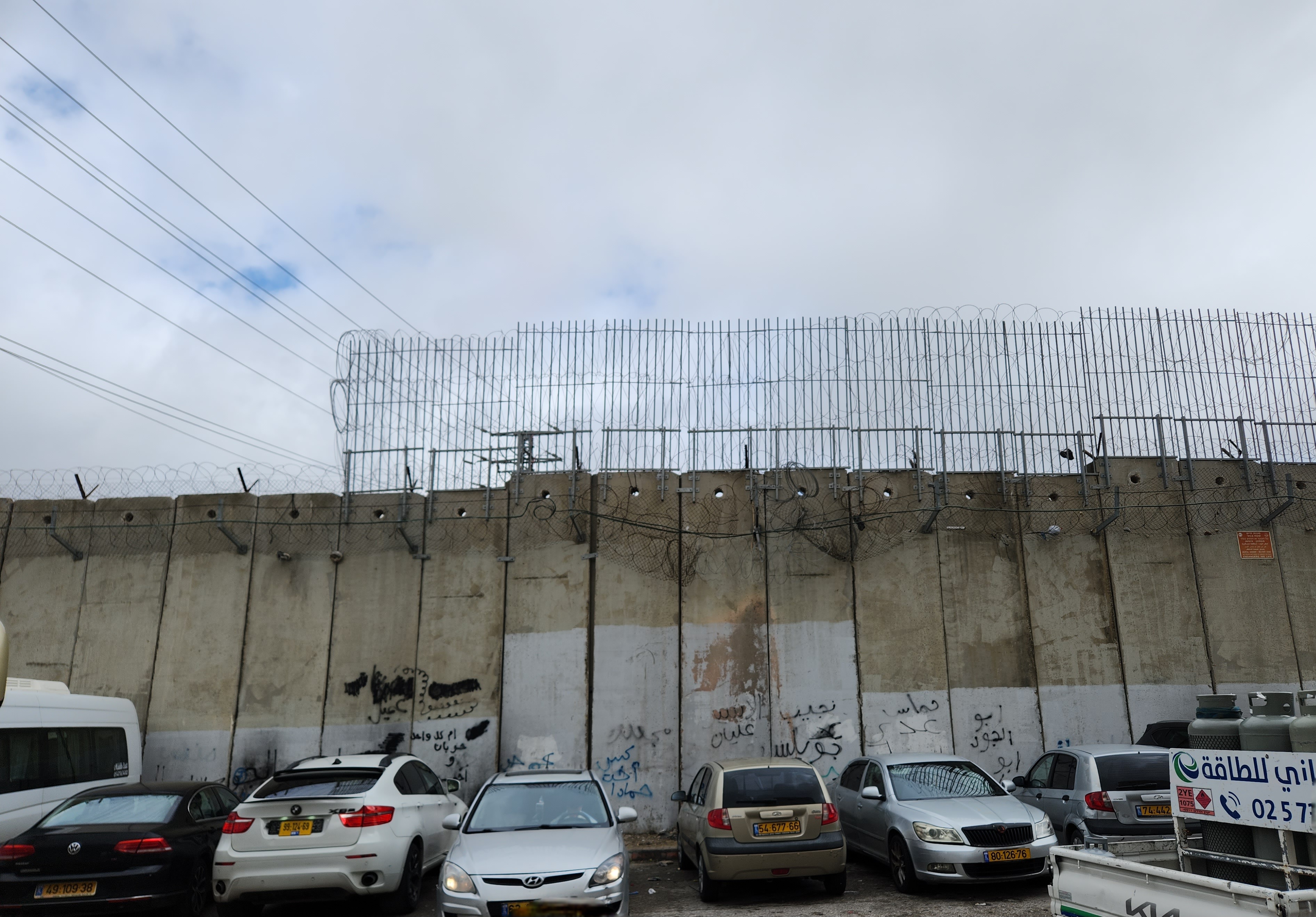
Photo: Militarized separation wall in Jerusalem.
While apartheid is the day-to-day reality of the Palestinian people, we have already met with local activists and organizers who have described Israel’s settler policies in great detail. I had assumed, to a degree, that Israeli settlements were partially or maybe even primarily being built in the desert – i.e., built on land that was unoccupied or had no prior development. This is not the case. The government of Israel actively appropriates the land and property of Palestinian people, typically providing no “eminent domain” style compensation. Land and buildings can be appropriated on any number of technicalities and pretexts, including mere absence from the property.
For example, if you fled your land or property because of war or conflict, the Israeli government can claim that you have abandoned that land/property and appropriate it for redistribution to Israeli settlers. We have heard from local community organizers who described this reality in despairing terms – if the government of Israel wants your land, they will have it. Often the best that Palestinians feel they can do is delay they appropriation of their land through court appeals, which they generally do not win. Activist after activist described this lived reality as one of population replacement – the intentional replacement of the Palestinian people with Jewish settlers, who are typically white, European and/or American immigrants to these lands. If the day-to-day lived reality of the Palestinian people is apartheid, the government of Israel’s goal – whether publicly stated or not, but demonstrated through the government’s actions – is ethnic cleansing and population replacement.
It is jarring to be encountering what I have described here so unambiguously and so early in this journey. Please continue to hold our delegation in your hearts and prayers, as we lend presence, witness, and love to those who are suffering these realities.
With much love, Rev. Manish
-
An Unwavering Belief in the Power of People Against the Expanding Circle of Impunity
We continue to play whack-a-mole in resisting the infinite cruelties of U.S Imperialism.
From Minneapolis to Caracas to Gaza, it’s all connected. “The circle of impunity is widening,” says UUJME President Dana Ashrawi. “BIPOC and other targeted communities in the United States have always experienced state violence with zero to little consequence. The violence is expanding, and echoes the experience of Palestinians in the West Bank and the lack of accountability of the State of Israel and its global north enablers.”
U.S. imperialism is doing what it has always done, pillaging the wealth of other nations, harming those most at risk, and choosing profit over people. It is trying to create as many crises as possible for the people in the United States - and beyond - its actions doing double duty as both cruel oppressions and ways to keep people busy and in despair. The impacts are the most devastating in historically marginalized communities - trans people, LGBTQ people, immigrants, the Black, Indigenous, People of Color community, women, people with disabilities, and people in lands overseas where the resources and strategic locations are more valuable than the lives ended in service of profit.
We mourn the killing of Renee Good, a trained observer of ICE activities, in Minneapolis. This murderous shooting by an ICE agent was less than a mile from where George Floyd was suffocated by the knee of a police officer in 2020. It occurred in the same state as the largest mass execution in U.S. history, in 1862 when 38 Dakota men were hanged.
We mourn the loss of life and the torpedoing of international law in Caracas, Venezuela, as the tools of Empire were deployed to extract the president of Venezuela and his spouse claiming rights to control Venezuelan oil and the affairs of the country itself.
We continue to mourn the loss of life in Gaza, the West Bank, Lebanon, and other sites around the region, where deprivation and death continue unabated, with Israel and the United States ever more brazen in their cruelties. The demand of Empire to impose its will for control of resources continues to take a deadly toll. In our country we see the rolling tide of fascist operations. But we also see the opposing tide of the people’s popular resistance.
This is the time to reach for each other – in congregations and beyond. Side with Love, to name but one UU organization, continues regular offerings to connect, refresh, and direct us back to the work of the world. Board member Rev. DL Helfer says, “I was taught long ago, and have always found it so, that when I am at my most despairing, being in service to others – whatever that looks like - shifts my perspective. So whether you are out marching or answering a defense line or feeding the unhoused, do that work. Every bit of each and every thing we do will help weave our work more strongly. As always, we are powerful when we act together.”
We lift up all the statements issued by so many of our justice partners - including but not limited to statements by the UUA, the UUSC, Side with Love, DRUUMM, Church of the Larger Fellowship, and beyond. We lift up UURISE, which passed an Action of Immediate Witness in 2018 calling to abolish ICE. We lift up those who are present to witness today, including the UUJME sponsored delegation of seminarians and religious professionals witnessing Israel’s illegal settlements, apartheid, and brutal treatment of Palestinians right now.
The harms continue, here and beyond. So too does our faith in action. Rest when you need, find courage, beloveds, and do not let the intentional overwhelm deter you. Love is, and always will be, stronger than hate. With collective action, a better world will be born.